In short
Yes, part of the weight lost on Ozempic, Wegovy or Mounjaro is muscle: in the SURMOUNT-1 tirzepatide study, about one quarter of the weight lost was lean mass. That is similar to a conventional diet, and much of it can be prevented. The three best-supported levers are enough protein at every meal, strength training at least twice a week and regular follow-up with your care team.
GLP-1 medications can produce dramatic weight loss. But the scale does not tell you what you are losing. Losing muscle means losing the strength to climb stairs, carry groceries or get up from a chair. It also means losing tissue that helps manage blood sugar. The good news: we know fairly well how to limit the damage.
In this article
Why you lose muscle when you lose weight
Any significant weight loss, whatever the method, comes with some loss of lean mass on top of fat. Lean mass includes muscle, but also water, organs and bone. When you eat much less, your body draws on its reserves, including muscle protein, especially if protein intake is low and the muscles are not being used.
GLP-1s strongly reduce appetite. According to the 2025 joint advisory published in the American Journal of Clinical Nutrition, calorie intake drops by 16 to 39% in people on these drugs. When you eat half as much, it becomes easy to fall short on protein without noticing.
What the studies show
The most precise way to measure body composition in trials is dual-energy X-ray absorptiometry (DXA). Here is the published data we checked.
| Study | Drug | Weight loss | What we know about lean mass |
|---|---|---|---|
| SURMOUNT-1 DXA substudy (2025) | Tirzepatide (Mounjaro, Zepbound) | −21.3% | About 75% fat and 25% lean mass; fat mass −33.9%, lean mass −10.9% |
| STEP 1 (NEJM, 2021) | Semaglutide (Wegovy) | −14.9% vs −2.4% on placebo at 68 weeks | Part of the loss came from lean mass (DXA substudy reported separately) |
| Meta-analysis in older adults on calorie restriction (2018) | None (diet) | Variable | Resistance training prevented 93.5% of the diet-related lean mass loss |
Two key points stand out.
- The ratio is no worse than with dieting. In SURMOUNT-1, the share of fat versus lean mass lost was similar in the treated and placebo groups. The drug does not “eat” muscle more than other methods. It simply produces much more weight loss, so more lean mass in absolute terms.
- Strength training changes the picture. In older adults on calorie restriction, adding resistance training almost completely protected lean mass. Those studies were not about GLP-1s, but the mechanism (muscle that is used is kept) is the same.
Lean mass is not the same as muscle
DXA measures “lean mass,” which includes water and organs. A drop in lean mass is therefore not all muscle. That is a good reason to be cautious about the alarming numbers circulating on social media, in either direction.
The 3 levers that protect your muscle
1. Protein at every meal, eaten first
During active weight loss, the 2025 joint advisory suggests aiming for 1.2 to 1.6 g of protein per kilogram of body weight per day, or 80 to 120 g per day in absolute terms, rather than the usual minimum of 0.8 g/kg. It also suggests eating protein first on your plate, since appetite fades quickly. Our guide to how much protein you need on Ozempic gives meal ideas that go down well even with nausea.
Needs vary with age, weight, kidney function and other factors: have your target confirmed by a doctor or registered dietitian.
2. Strength training, at least twice a week
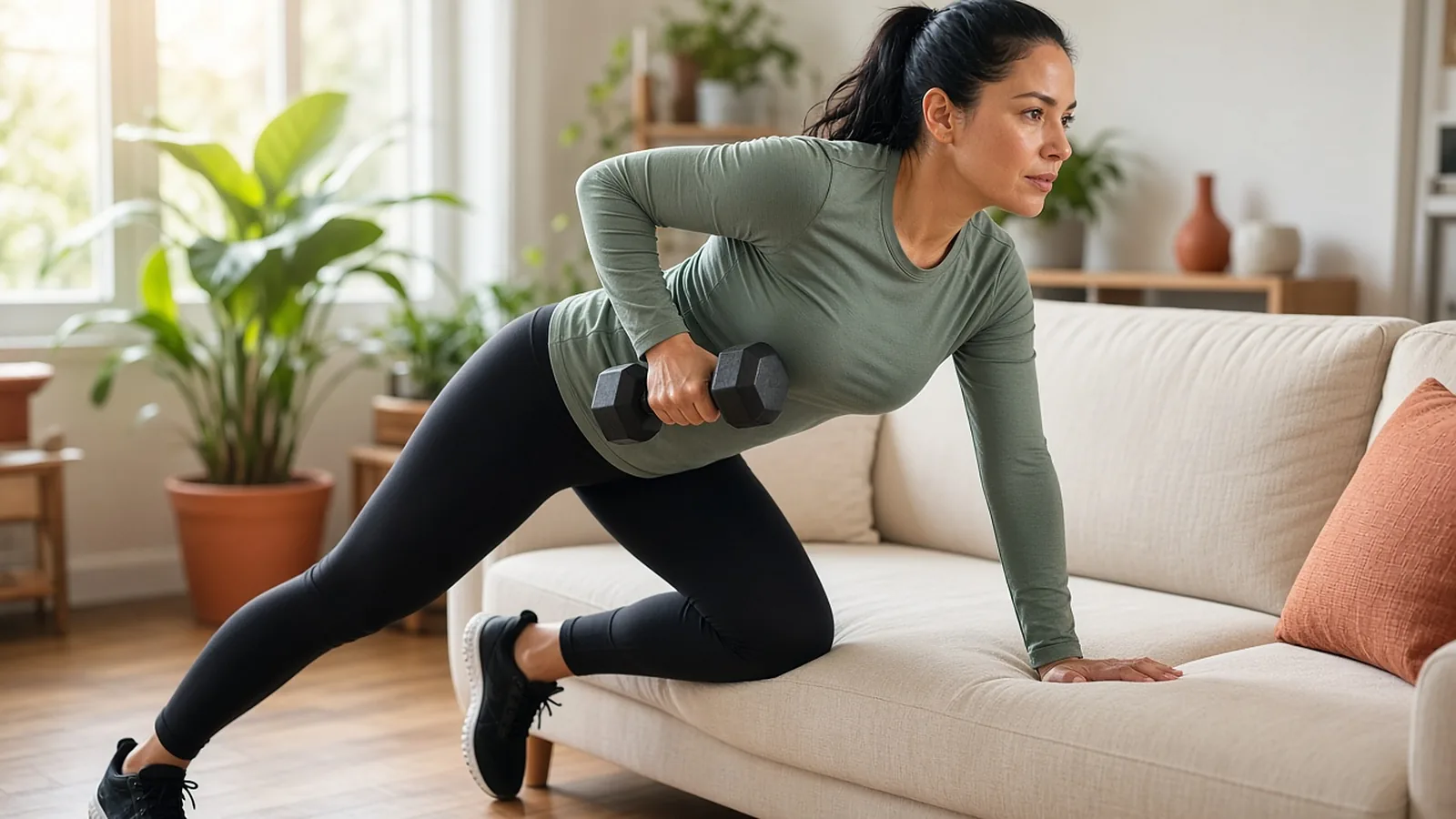
The Canadian 24-Hour Movement Guidelines recommend that adults aged 18 to 64 do muscle-strengthening activities using major muscle groups at least twice a week, on top of 150 minutes of moderate-to-vigorous activity. You do not need a gym: getting up from a chair, pushing against a wall or pulling on a band is enough to start. Our gentle 4-week plan was designed for people getting back into movement.
3. Follow-up, not just the scale
Ask your care team how to track your strength and body composition, not only your weight. Simple markers help: how many times you can stand up from a chair in 30 seconds, how easily you climb stairs, your waist size. Report any unusual fatigue, dizziness or rapid loss of strength.
Bring these to your next appointment
- What protein target suits my situation?
- Can I start strength training? With what precautions?
- How can we track my strength and muscle mass during treatment?
- What should I do on days when I eat very little?
What if I am over 60?
With age, we naturally lose muscle mass and strength, and muscles respond less well to protein. The PROT-AGE expert group already recommends 1.0 to 1.2 g/kg/day for healthy adults over 65, and more for those who are ill or physically active, except in severe kidney disease. Rapid weight loss after 60 therefore deserves particular attention to strength. Women in menopause have their own issues, covered in our article on menopause and muscle loss.
What is not a solution
On social media, “peptides” are often promoted as muscle protectors to add to a GLP-1. Health Canada points out that unauthorized injectable peptides sold online have not been assessed for safety, effectiveness or quality, and it seized contaminated products in 2026. Read our guide are peptides legal in Canada? before you are tempted.
Likewise, stopping the medication does not give back lost muscle. The STEP 1 extension showed that after stopping semaglutide, participants regained about two thirds of the weight they had lost within a year. See stopping Ozempic without regaining it all.
Talk to a health professional
This article is for information only. It does not replace advice from your doctor, pharmacist or dietitian. Do not change your treatment without talking to them.
Frequently asked questions
Does Ozempic melt muscle?
Ozempic does not target muscle. Like any significant weight loss, it leads to some loss of lean mass on top of fat. In SURMOUNT-1 (tirzepatide), lean mass made up about 25% of the loss, similar to placebo. Protein and strength training help limit that loss.
How much protein should I eat on a GLP-1?
The 2025 joint advisory suggests 1.2 to 1.6 g per kilogram per day during active weight loss, or 80 to 120 g per day. Your exact target depends on your health, especially your kidneys: have it confirmed by a professional.
Is walking enough to keep muscle?
Walking is excellent for your heart, mood and blood sugar, but it does little for the upper body and is not enough to maintain muscle mass. Canadian guidelines recommend adding muscle-strengthening activities at least twice a week.
Can I regain lost muscle?
Yes. At any age, muscle responds to strength training combined with enough protein. Progress is slower with age, but it is real.
Do I need protein supplements?
No. They can help when appetite is very low, but food (dairy, eggs, fish, legumes, tofu, meat) is usually enough. A meta-analysis in postmenopausal women found that whey protein only helped muscle when combined with resistance training.
Sources
- Mozaffarian D et al. Nutritional priorities to support GLP-1 therapy for obesity. Am J Clin Nutr, 2025 (full text, PMC)
- Look M et al. Body composition changes during weight reduction with tirzepatide in SURMOUNT-1. Diabetes Obes Metab, 2025 (PubMed)
- Wilding JPH et al. Once-weekly semaglutide in adults with overweight or obesity (STEP 1). NEJM, 2021
- Sardeli AV et al. Resistance training prevents muscle loss induced by caloric restriction in obese elderly individuals. Nutrients, 2018 (PubMed)
- Wilding JPH et al. Weight regain after withdrawal of semaglutide: STEP 1 extension. Diabetes Obes Metab, 2022 (PubMed)
- Bauer J et al. PROT-AGE recommendations on protein intake in older people. JAMDA, 2013 (PubMed)
- CSEP. Canadian 24-Hour Movement Guidelines for Adults aged 18–64
- Health Canada. Advisory on contaminated, unauthorized injectable peptides, November 2026
This article is for information only and does not replace advice from a health professional. Talk to your doctor, pharmacist or a registered dietitian before changing your treatment, diet or exercise.