In short
GHK-Cu is a small copper-binding peptide found naturally in the body and widely used in anti-aging serums. In the lab, it stimulates collagen production and wound healing. But a review published in 2025 points to a “surprising absence of clinical studies” on its anti-wrinkle effect when applied to the skin. In a cream, it is a cosmetic ingredient; as an injection, it is not authorized: Health Canada seized it and recalled GHK-Cu powders in 2026. No cream can fix significant excess skin after major weight loss.
After significant weight loss, especially rapid loss, many people notice less firm skin on the face, neck, arms or belly. GHK-Cu serums are often presented as the answer. Here is what we actually know, without exaggerating in either direction.
In this article
What is GHK-Cu?
GHK is a tripeptide (three amino acids: glycine, histidine, lysine) discovered in human plasma. Bound to a copper ion, it forms GHK-Cu, or “copper peptide.” There is also a modified version, Pal-GHK (palmitoyl tripeptide-1), designed to penetrate the skin better.
What the studies show
In the lab: real effects
A 2018 review by Loren Pickart, the researcher who discovered GHK, summarizes the actions observed in cells and animals: increased production of collagen, elastin and glycosaminoglycans, support for skin fibroblasts, blood vessel formation and improved tissue repair. Note that the lead author is a pioneer and long-time promoter of the molecule.
On human skin: few clinical trials
A review published in 2025 in BioImpacts asked whether GHK applied to the skin truly works against wrinkles. Its conclusions:
- based on cell studies, GHK can be considered an anti-wrinkle ingredient;
- yet despite widespread use in products on the market, there is a “surprising absence of clinical studies” using GHK-Cu and Pal-GHK;
- published information on their skin permeability, effectiveness and stability is insufficient;
- these peptides are unstable and hard to formulate, which may limit the effect of any given product.
| Question | What we know |
|---|---|
| Effect on collagen in the lab | Yes, shown in cells |
| Anti-wrinkle effect in humans | Few published clinical trials |
| Skin penetration | Possible but varies with formulation |
| Effect on excess skin after major weight loss | No evidence |
| Status in a cosmetic cream | Cosmetic ingredient |
| Status as an injection | Not authorized; seized and recalled in 2026 |
Cream or injection: two different worlds
In Canada, a cosmetic is any substance used to clean, improve or change the complexion, skin, hair, nails or teeth. Health Canada requires that claims on a label or in an ad be accurate so they do not mislead people. A GHK-Cu serum sold as a cosmetic falls under this framework.
Why, then, are there so many GHK-Cu products? Unlike a drug, a cosmetic does not go through a pre-market review of its effectiveness: companies instead notify Health Canada when a new cosmetic product is being sold, and remain responsible for its safety and for making accurate claims. That is why a product can legally contain an ingredient whose anti-wrinkle effect has rarely been tested in clinical trials.
Injectable GHK-Cu is another matter entirely. It is among the unauthorized seized products listed by Health Canada in April 2026. On May 7, 2026, the department also recalled GHK-Cu and BPC-157 powders sold to pharmacies as unauthorized active pharmaceutical ingredients. To understand these actions, read are peptides legal in Canada?
Never inject a “cosmetic peptide”
Injecting products bought online exposes you to infections, reactions and the risks Health Canada lists in its advisories. For injectable aesthetic treatments, see a doctor and use only authorized products.
Loose skin after weight loss: realistic expectations
Why skin becomes loose
When you gain weight, the skin stretches to adapt. After a large loss, its ability to retract depends on several factors: age, genetics, years of sun exposure, smoking, and how much weight was lost and over how long. With age, and especially at menopause, skin also naturally becomes less firm. These factors explain why two people who lose the same weight do not get the same result, and why no product can promise the same thing to everyone.
What may help a little
- Losing weight at a reasonable pace, in agreement with your care team.
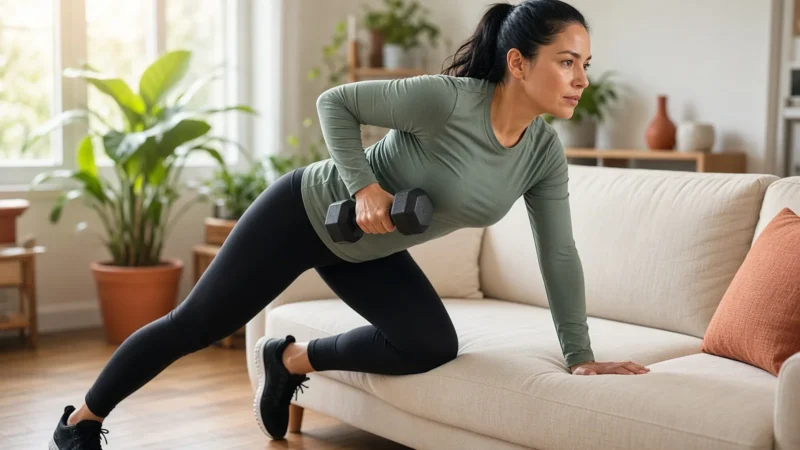
- Keeping your muscle: strength training improves tone in the arms, thighs and glutes. See our guide to muscle loss on Ozempic.
- Protecting your skin from the sun and not smoking, two known drivers of skin aging.
- Moisturizing for comfort and appearance.
- Being kind to yourself: body changes after weight loss are common and normal, and they say nothing about your worth or your effort.
What no cream will do
After very large weight loss, excess skin can cause discomfort, irritation and self-consciousness. No study shows that a serum, GHK-Cu or otherwise, can correct significant excess skin. In people who lost a lot of weight after bariatric surgery, a systematic review published in 2018 found that body contouring surgery significantly improved physical functioning, psychological well-being and social functioning. It is a major medical decision, to be discussed with your doctor and a certified plastic surgeon.
Choosing a serum without getting fooled
Good habits
- Be wary of claims like “lifting effect,” “replaces Botox” or “firms in 7 days”
- Check the ingredient list: GHK-Cu often appears as “copper tripeptide-1”
- Patch-test on a small area of skin before full use
- Avoid combining several strong actives without professional advice
- Report an adverse reaction to a cosmetic to Health Canada
Skin also changes during menopause. Our article on menopause and muscle loss covers the adjustments that matter after 40.
Talk to a health professional
For a skin concern, see your doctor, a dermatologist or your pharmacist. This article is for information only and is not medical advice.
Questions to ask before buying a skin product
Before spending on a serum, ask yourself a few simple questions. Does the brand make claims about wrinkles that sound like a medical treatment? Is the full ingredient list printed on the label, as Canadian rules require for cosmetics? Is the price justified by anything other than the word “peptide”? If you have sensitive skin, test a small area first, and ask a pharmacist or dermatologist if you are unsure.
Frequently asked questions
Does GHK-Cu really work on wrinkles?
In the lab, it stimulates collagen. But a 2025 review notes a surprising absence of human clinical studies on its anti-wrinkle effect when applied to the skin. The effect of a given product also depends on its formulation.
Is GHK-Cu legal in Canada?
As an ingredient in cosmetic products applied to the skin, it is on the market. As an injection, it is not authorized: Health Canada seized it and recalled GHK-Cu powders in 2026.
Can GHK-Cu tighten skin after Ozempic?
No study shows that. Keeping your muscle, protecting your skin from the sun and losing weight at a reasonable pace are more realistic steps. For significant excess skin, talk to your doctor.
Can I use GHK-Cu with other actives?
Some combinations of strong actives can irritate the skin. Ask your pharmacist or a dermatologist if you already use prescription products.
What name does GHK-Cu go by on the label?
It is often listed as “copper tripeptide-1.” Palmitoyl tripeptide-1 is a related modified form.
Sources
- Mortazavi SM et al. Topically applied GHK as an anti-wrinkle peptide: advantages, problems and prospective. BioImpacts, 2025 (PubMed)
- Pickart L, Margolina A. Regenerative and protective actions of the GHK-Cu peptide. Int J Mol Sci, 2018 (PubMed)
- Toma T et al. Does body contouring after bariatric weight loss enhance quality of life? Obes Surg, 2018 (PubMed)
- Health Canada. Recall: GHK-Cu and BPC-157 powder, May 2026
- Health Canada. Think twice before injecting peptides bought online, April 2026
- Health Canada. Cosmetic safety
This article is for information only and does not replace advice from a health professional. Talk to your doctor, pharmacist or a registered dietitian before changing your treatment, diet or exercise.